

Businesses that foster a positive work environment can reap the benefits of an engaged workforce. With an empowered employee culture, staffers are loyal, motivated to exceed company goals and more likely to talk highly of their company.
Conversely, a negative work environment is likely to cause turnover and hurt revenue. Learn the benefits of creating a positive workplace atmosphere and tips for making it happen.
How a positive work environment leads to business success
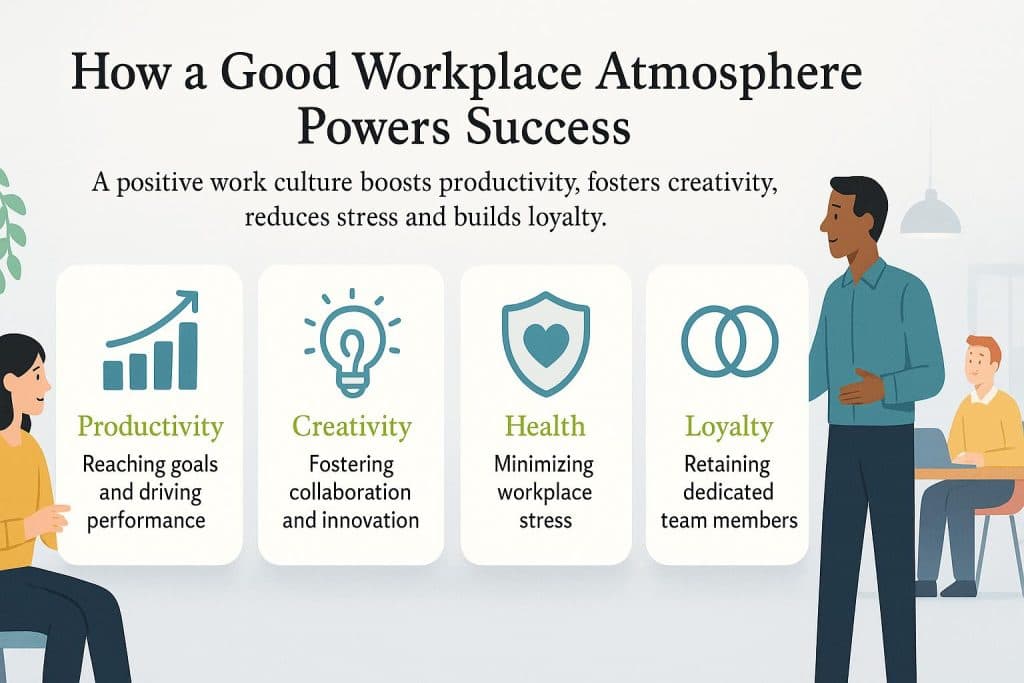
A workplace environment that boosts employee morale provides many benefits, including improved productivity, increased creativity, stress reduction and strong company loyalty. Let’s take a closer look at these key advantages.
- Productivity: A happy work culture can motivate workers to surpass goals, work efficiently and perform better overall. The result may be higher revenue for your business. [See the best goal setting apps and goal tracking software.]
- Creativity: When employees feel comfortable sharing their ideas, their creativity can blossom. This gives your staff the confidence to effectively innovate and efficiently solve problems. “When people feel safe, respected and supported, psychologically, [they] show up with more creativity, responsibility and loyalty,” said Brittany Truszkowski, chief operating officer at Grand Canyon Law Group.
- Improved health: A toxic company culture can increase stress both at work and at home. High stress levels cause physical and mental symptoms that can hurt workers’ overall performance. Employees are generally healthier when they work in a productive atmosphere, which can prevent sick days and leaves of absence.
- Loyalty: When you provide employees with a positive work environment, they often don’t mind going above and beyond what’s requested of them and are less likely to leave for a rival company. Happy staffers root for their business’s success and are committed to carrying out its vision. “In a positive work environment, people feel respected, supported and trusted, but they’re also naturally more engaged and productive,” said Dovilė Gelčinskaitė, HR business partner at Omnisend. “They care more, stay longer and contribute to a healthier company culture.”
How a bad working environment hurts your business
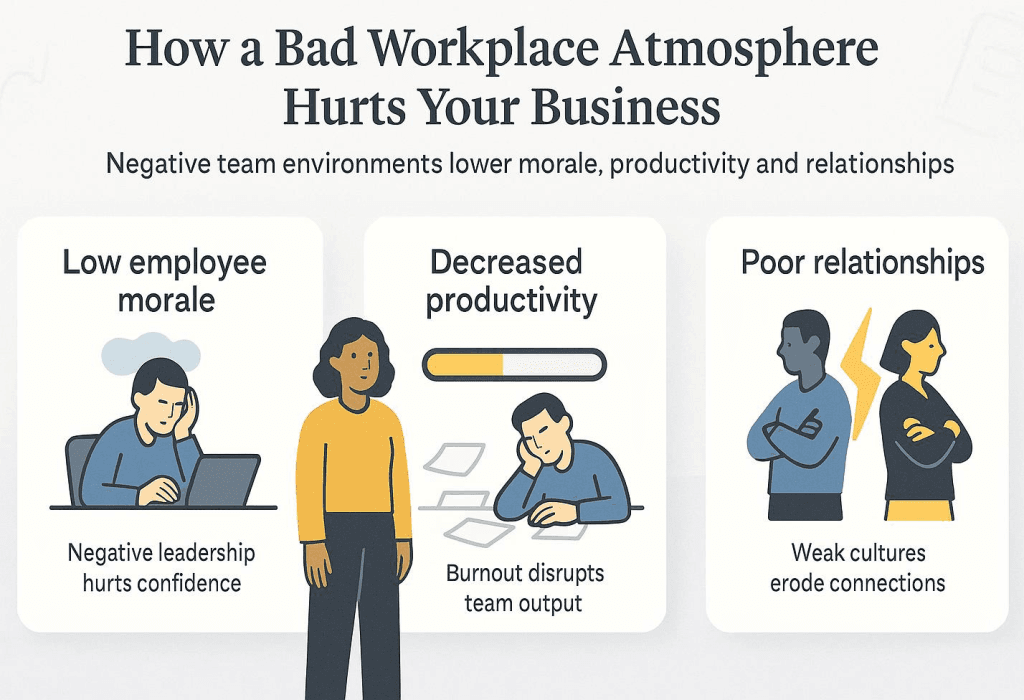
A poor workplace environment can lead to poor performance from good employees. In the U.S. alone, employee disengagement costs companies more than $500 billion every year, affecting productivity, wellness and revenue. Here are some other ways a bad workplace hurts your business:
- Low employee morale: Ineffective leadership can make good employees feel unwanted and unappreciated. If management is looking out only for their own best interests and doesn’t effectively communicate with the group, the negativity will trickle down to their staff. This negativity can lower employees’ confidence and cause them to lose interest in the company.
- Decreased productivity: Disengaged team members do only enough work to get by and get paid. They aren’t focused on performing their best or on increasing your small business’s productivity, and they may feel burnt out. Their poor attitudes will most likely spread to other colleagues.
- Poor relationships: A weak culture also demoralizes staffers and hurts manager-employee relationships. Workers may opt to leave in favor of a better environment elsewhere.
“Problems are like a slow leak that perpetuates rot — and they do not go away on their own,” said Dr. Sam Adeyemi, chief executive officer at Sam Adeyemi, GLC, Inc. “You do not want a small issue spinning into a larger problem that affects your team negatively or destroys morale and workplace culture.”
In contrast, an engaged employee considers what’s in the company’s best interest. This motivates them and allows them to grow and get better at their job, so both your staff and company thrive.
How to create a good work environment
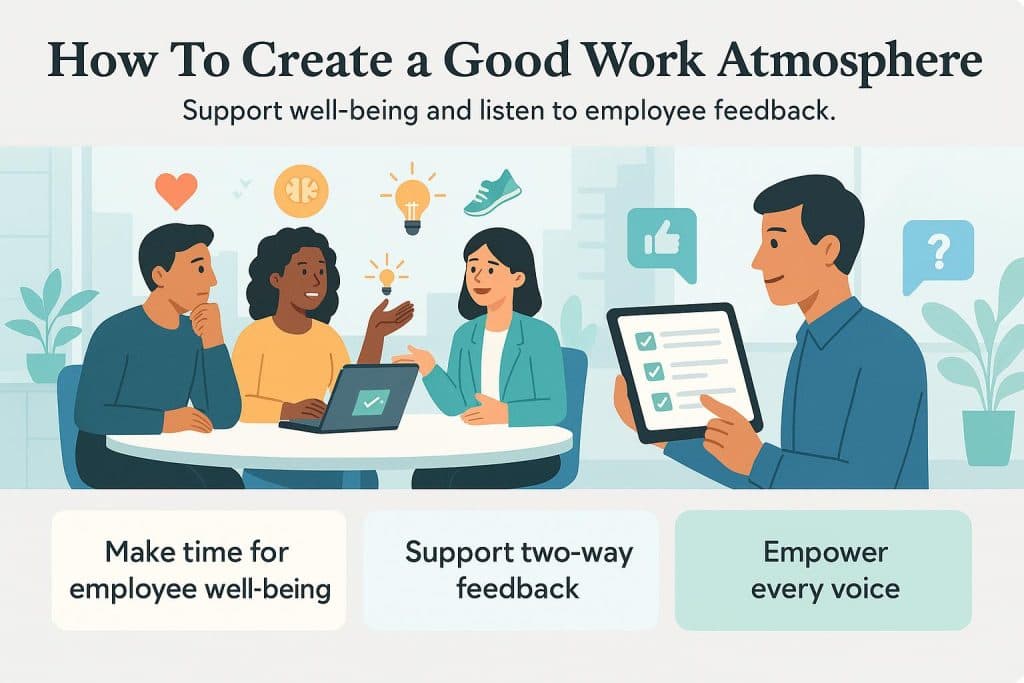
Creating a strong company culture takes effort. The tips below will set you on the right path, as will these solutions for building a positive sales culture.
Prioritize physical, mental, emotional and spiritual well-being
Creating a good work environment requires a four-prong approach. You want to make employees feel valued physically, mentally, emotionally and spiritually.
A business that honors employees as humans instead of faceless worker bees can help reduce turnover, burnout and overall indifference at work. This means supporting employees’ mental health, empowering your staff, encouraging exercise and rewarding top workers with discretionary bonuses. “Supporting well-being is first and foremost about creating space for people to take care of themselves and feel okay doing it,” Gelčinskaitė said. “For us, that includes flexibility, genuine care and being open when things aren’t going great.” [Learn the reasons employees quit and how to prevent them.]
Ask for employee feedback
Before you can improve employee engagement, you need to take the pulse of your team. Sometimes, receiving feedback may feel taboo, and people may be reluctant to advise someone they consider a superior.
Truszkowski told business.com that managers and business owners should listen to employees by running quarterly pulse surveys, post-case debriefs and regular team check-ins where people can share candidly.
If you don’t know how staffers feel about your workplace, you can’t offer improvements. “Feedback is a part of how we work and improve together, not just something we ask for once a year,” Gelčinskaitė advised. “Acting responsibly matters, too. We care about what’s happening outside our walls, and we invest in things that reflect our values.”
Focus on social responsibility
Nowadays, both consumers and workers are looking for companies that follow ethical practices. That means lessening your business’s carbon footprint, contributing to charitable causes and taking a stand on social issues.
Having an emphasis on social responsibility through local causes and legal education allows employees to feel more involved in the company, growing those work relationships, Truszkowski said. She said teams can volunteer, donate and advocate together for an even bigger reason to show up than just the paycheck, and it instills pride and purpose.
Employees are highly motivated if they feel the work they do has a meaningful impact and the company culture reflects their values. Determine your business’s core tenets, and invite employees to give back in ways that align with what is personally important to them.
Offer flexible work arrangements
Research from McKinsey found that more than 80 percent of employees said flexible and remote work arrangements improve their work environment, which makes them happier and more engaged.
If giving your employees full-time remote schedules isn’t an option, there are other arrangements you can consider. For example, you could offer a compressed workweek with four 10-hour workdays instead of five eight-hour days, or you could offer part-time work or flextime.
Give employees growth opportunities
Another way to cultivate a positive work environment is by creating training opportunities for your employees. Good employees seek career growth, and they will quit jobs that do not allow opportunities for professional development.
Truszkowski said you need to invest in growth by building clear career paths, all the way from entry-level admin to leadership. She said that when offering organized training weekly, mentorship and adhering to a promote-from-within philosophy, people will stay and rise because they see a future in your organization.
Invest in training programs for your employees, and encourage them to take on new projects and improve their skill sets. Your employees will be more dedicated to the organization when they know you’re committed to seeing them succeed.
Building a positive workplace environment
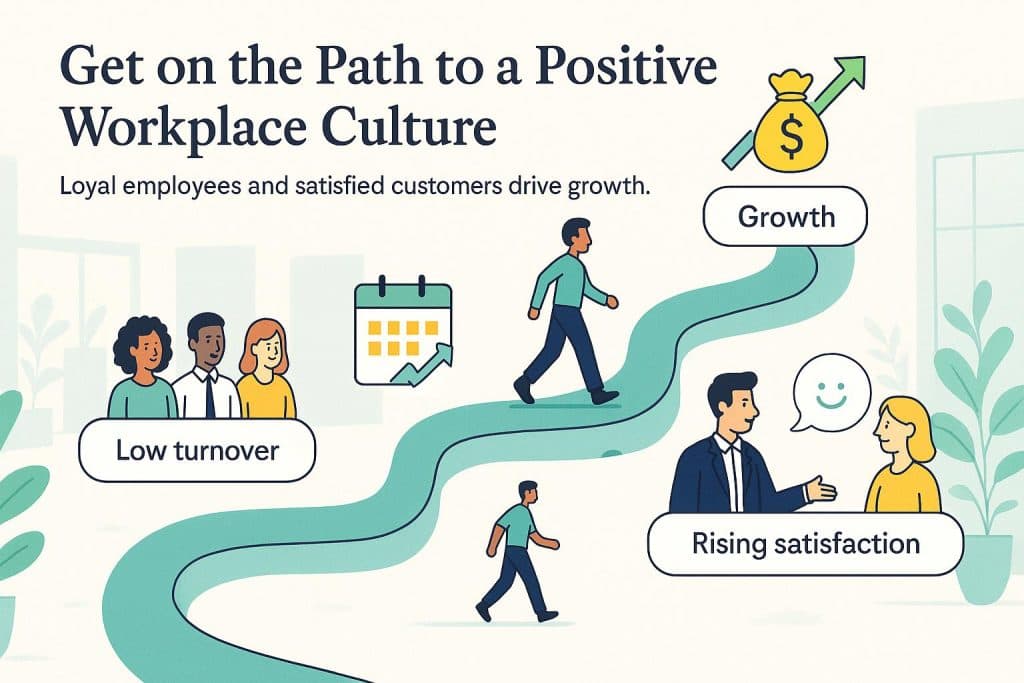
If you want to discern whether you’re providing a positive workplace environment, look at your employee turnover rate, worker attendance and customer satisfaction levels. You can gauge the kind of culture you’re facilitating by assessing whether employees and clients are showing loyalty. With the right atmosphere, you’ll see your business’s profits and reputation grow.
Amanda Hoffman and Jamie Johnson contributed to the reporting and writing in this article.
link




More Stories
12-hour days, no weekends: the anxiety driving AI’s brutal work culture is a warning for all of us | AI (artificial intelligence)
How would Maine’s proposed climate superfund work?
Tesla Fosters Toxic Work Environment at German Plant, Union Says