
Demand for Water Enhancers in USA 2025 to 2035
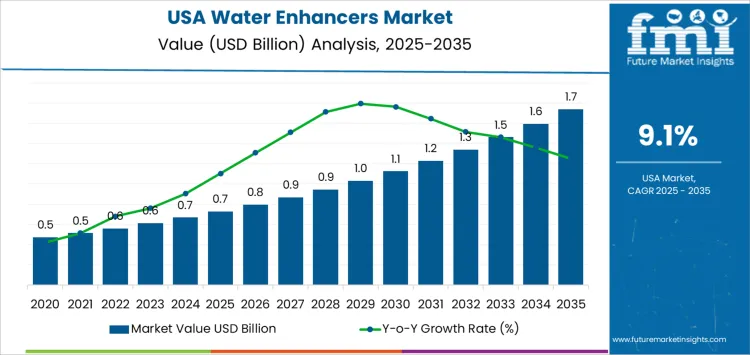
The demand for water enhancers in the USA is valued at USD 0.7 billion in 2025 and is forecasted to reach USD 1.7 billion by 2035, recording a CAGR of 9.1%. Demand is driven by rising consumer preference for convenient hydration formats and reduced-sugar beverage alternatives. Water enhancers offer customizable flavoring with low calorie content and are positioned as an affordable replacement for carbonated soft drinks and ready-to-drink flavored beverages.
Flavored formulations represent the leading category, supported by product expansion into functional profiles such as vitamins, electrolytes, caffeine, antioxidants, and plant-based actives. These liquid concentrates and powder sticks enable portability and portion control, aligning with on-the-go lifestyle preferences. Growth is reinforced by strong retail availability across supermarkets, convenience stores, and online subscription channels.
Adoption is strongest in the West, South, and Northeast, where premium hydration trends and willingness to try new beverage formats remain high. Demand is also influenced by sustainability considerations, as enhancers reduce packaging waste relative to bottled flavored beverages. Key suppliers include PepsiCo Inc., The Coca-Cola Company, Nestlé S.A., The Kraft Heinz Company, and Britvic Plc. Their strategies focus on flavor innovation, clean-label positioning, sugar reduction, and partnerships with sports and wellness brands to target younger consumers and health-conscious households.
Quick Stats for USA Water Enhancers Demand
- USA Water Enhancers Sales Value (2025): USD 0.7 billion
- USA Water Enhancers Forecast Value (2035): USD 1.7 billion
- USA Water Enhancers Forecast CAGR (2025–2035): 9.1%
- Leading Product Type in USA Water Enhancers Demand: Flavored
- Key Growth Regions in USA Water Enhancers Demand: West USA, South USA, Northeast USA
- Top Players in USA Water Enhancers Demand: PepsiCo Inc., The Coca-Cola Company, Nestlé S.A., The Kraft Heinz Company, Britvic Plc
What is the Growth Forecast for Water Enhancers Industry in USA through 2035?
Demand for water enhancers in the United States follows a two-phase growth pattern driven by lifestyle shifts and category maturity. Early growth benefits from rapid adoption among consumers reducing sugary beverages and increasing hydration convenience. New flavor systems, zero-calorie formulations, and added functional ingredients such as electrolytes and vitamins stimulate strong trial rates and repeat usage in the first half of the period. Retail placement near bottled water and ready-to-drink items supports visibility and category expansion.
Late-period growth becomes more incremental as penetration levels rise and competitive offerings expand within flavored hydration formats. Demand increasingly depends on differentiated claims such as natural sweeteners, clean-label formulations, and personalized nutrition. Established brands maintain volumes while private-label offerings intensify pricing pressure. The curve indicates a shift from acquisition-driven acceleration to retention-driven stability. Functional sub-segments continue to provide uplift, although at a moderated pace. The comparison shows early-stage momentum influenced by novelty and health trends, followed by steadier expansion shaped by reformulation and value-driven consumer behavior.
USA Water Enhancers Key Takeaways
| Metric | Value |
|---|---|
| USA Water Enhancers Sales Value (2025) | USD 0.7 billion |
| USA Water Enhancers Forecast Value (2035) | USD 1.7 billion |
| USA Water Enhancers Forecast CAGR (2025-2035) | 9.1% |
Why is the Demand for Water Enhancers in the USA Growing?
Demand for water enhancers in the USA is increasing because many consumers seek inexpensive, convenient ways to make plain water more appealing and flavorful without turning to sugary beverages. Water enhancers, such as liquid drops, powders or squeezable concentrates, offer portable portion control that suits busy lifestyles, office routines and on-the-go hydration. Growth is supported by rising health consciousness and public messaging about reducing sugar intake. Manufacturers promote zero-calorie or low-calorie enhancer lines that appeal to dieters, fitness enthusiasts and individuals managing caloric intake. Retailers carry a wide selection of flavors and formats to target different age groups and preferences. E-commerce and subscription models make these products easily accessible for frequent buyers.
Fitness centres, sports nutrition brands and outdoor consumers also drive demand. Enhancers are used before, during and after workouts to encourage hydration while adding taste without significantly changing nutritional content. Flavored water alternatives often replace sodas and artificially sweetened drinks in households aiming for healthier beverage choices. Constraints include competition from flavored sparkling waters and ready-to-drink bottled drinks, which sometimes offer perceived higher convenience. Perceptions around artificial sweeteners or synthetic additives in some enhancers may limit adoption among health-conscious buyers. Some users may prefer natural fruit-infused water or whole fruit over processed concentrates.
Which Product Types and Distribution Channels Lead Demand for Water Enhancers in the United States?
Demand for water enhancers in the United States is fueled by consumer preference for flavor customization, low-calorie hydration, and functional beverage alternatives. The category benefits from active lifestyles, high bottled-water consumption, and convenience packaging such as portable squeeze bottles and liquid drops. Clean-label trends, sugar reduction policies, and growth in fitness-focused products continue to drive new formulations supported by efficient retail distribution across both mass and digital channels.
By Product Type, Flavored Enhancers Lead Demand
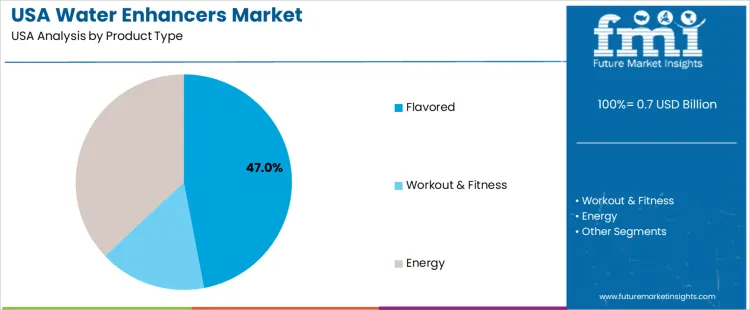
Flavored water enhancers represent 47.0%, driven by daily hydration routines and wide household adoption across age groups. Consumers seek refreshing taste variations without added sugar or carbonation, supporting repeat purchase behavior. Energy water enhancers account for 37.0%, popular among students, workers, and fitness users needing quick functional benefits such as caffeine and B-vitamins. Workout and fitness-specific formats hold 16.0%, targeting athletic hydration through electrolytes, amino acids, and endurance-boosting blends. Product selection emphasizes portability, fast dissolving, and strong flavor retention, aligning with on-the-go consumption habits and customizable beverage preferences across USA regions.
Key Points:
- Flavored enhancers dominate everyday hydration routines
- Energy formats serve caffeine-based functional use cases
- Fitness-focused products grow alongside sports nutrition trends
By Distribution Channel, Hypermarkets and Supermarkets Maintain the Largest Share
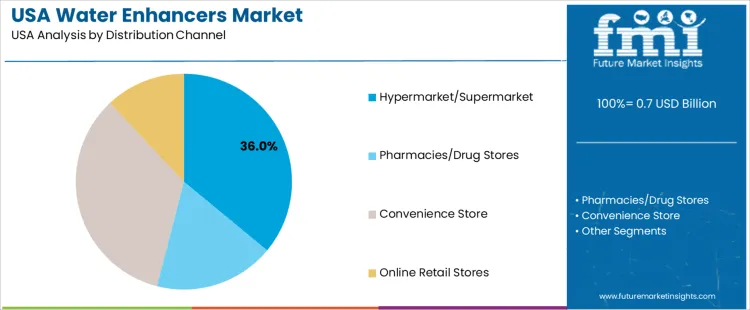
Hypermarkets and supermarkets account for 36.0%, driven by in-store visibility and routine grocery purchasing patterns. Convenience stores hold 34.0%, reflecting impulse buying near checkout and travel-focused sales. Pharmacies and drug stores represent 18.0%, supported by wellness messaging and functional positioning. Online retail stores hold 12.0%, growing through subscription models and direct-to-consumer branding. Distribution dynamics favor widespread product availability, promotional bundling with bottled water, and seasonal performance linked to outdoor activities and sports participation across the United States.
Key Points:
- Large retail chains support high-turnover household stocking
- Convenience stores capture on-the-go demand spikes
- Online channels expand subscription-driven repeat purchases
What are the Drivers, Restraints, and Key Trends of the Demand for Water Enhancers in the USA?
Growth of health-conscious consumption, increased demand for flavor variety without added sugars and rising popularity of hydration options beyond plain water are driving demand.
In the United States, consumers increasingly view water as the foundation of daily hydration but often seek taste, vitamins or electrolyte enrichment to make it more appealing. Busy adults, athletes and wellness-oriented individuals add convenient, shelf-stable water enhancer drops or powders to plain water to avoid sugary beverages while still enjoying flavor and functional benefits. Retailers and convenience-store chains keep water-enhancer SKUs near checkout aisles to cater to impulse buyers looking for refreshment without calories. Manufacturers and private-label brands respond with zero-calorie and lightly flavored offerings to match consumer preferences for lighter, “better-for-you” hydration alternatives.
Competition from flavored bottled water, carbonated drinks and refillable beverage trends restrain demand.
Flavored bottled water and ready-to-drink enhanced beverages offer convenience and consistency without needing separate enhancer products, reducing incentive for some consumers to buy water enhancers. Carbonated soft drinks with reduced-sugar formulations still compete in flavor and convenience. Refillable water bottles, reusable hydration systems and home filtration models encourage many buyers to stick with purified water alone or mix in fresh fruit rather than chemical or powdered additives. These options limit category penetration where consumers prioritize convenience or natural alternatives.
Shift toward functional enhancers with vitamins, electrolytes or herbal extracts, increased marketing for sustainable bottles and rising interest in portable, concentrated formats define key trends.
Manufacturers are expanding water enhancer formulas that deliver electrolytes, vitamin C, antioxidants or botanical extracts to appeal to fitness, immunity and wellness segments. Low-dosage, portable dropper bottles and single-serve stick packets gain popularity among travelers, office commuters and gym users seeking hydration on the go. Brands position water enhancers as complementing active lifestyles and clean-eating behaviors. Growing consumer interest in sustainable packaging drives use of lightweight, recyclable or reusable bottles paired with enhancer refills rather than single-use beverages. These developments suggest ongoing demand for water enhancers aligned with health, convenience and sustainability motivations among USA consumers.
Analysis of the Demand for Water Enhancers in the USA by Region
Demand for water enhancers in the United States is increasing as consumers focus on hydration convenience, low-calorie functional beverages, and flavor customization, while reducing sugar-sweetened soft drink intake. Adoption is shaped by fitness engagement, office-based consumption, refillable-bottle use, and retail placement across grocery and e-commerce channels. Formulations featuring electrolytes, vitamins, natural flavors, and zero-sugar claims are accelerating product diversification. The West USA posts a 10.5% CAGR, followed by the South USA at 9.4%, the Northeast USA at 8.4%, and the Midwest USA at 7.3%. Supply chain partners emphasize portability, clean-label formats, and flavor-stability requirements that support refrigerated or ambient storage across multipack distribution.
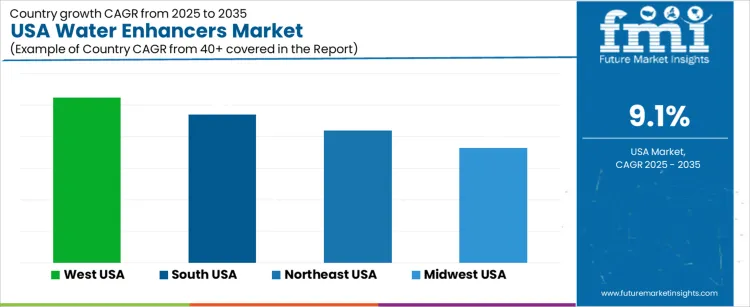
| Region | CAGR (2025-2035) |
|---|---|
| West USA | 10.5% |
| South USA | 9.4% |
| Northeast USA | 8.4% |
| Midwest USA | 7.3% |
How is the West USA driving demand for water enhancers?
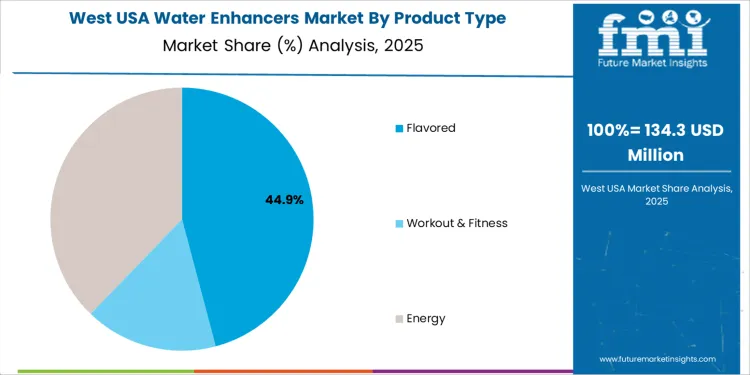
The West USA reports the fastest growth at 10.5% CAGR, supported by heightened focus on health-oriented hydration and strong consumer adoption of reusable water bottles across California, Oregon, and Washington. Functional hydration brands integrate electrolytes, caffeine-free botanical extracts, and natural fruit flavors to attract active lifestyle consumers in fitness-dense metropolitan areas. Retailers emphasize merchandising near bottled water aisles and checkout counters to improve visibility for impulse and convenience-based purchases. Beverage startups offer sugar-free squeezer formats and powder-concentrate sticks designed for portability in outdoor and work-commute settings. E-commerce distribution supports recurring sales through subscription fulfillment models. Manufacturers evaluate product compatibility with cold-fill lines and regulatory requirements for “natural flavor” and color-free labeling.
- Active lifestyle networks driving portable-hydration purchases
- Clean-label functional positioning expanding use cases
- Retail merchandising improving consumer trial frequency
- Subscription e-commerce reinforcing repeat demand
How is the South USA shaping consumption patterns?
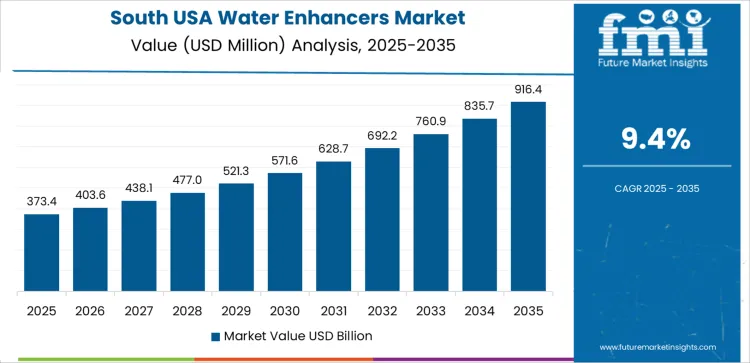
The South USA grows at 9.4% CAGR, supported by high climate-driven hydration needs and continuous beverage consumption across Florida, Texas, and Georgia. Convenience stores and mass-merchandiser chains remain key channels, where shelf placement near bottled-water multipacks encourages incremental add-on purchasing. Flavor preferences reflect regional taste intensity, leading to strong demand for fruit-forward profiles and electrolyte-support formulations targeted toward outdoor recreation, school sports, and labor-intensive workplaces. Manufacturers scale production lines for value-priced SKU ranges optimized for suburban household budgets. Brand adoption expands through sampling at fitness clubs and community events. Procurement teams review packaging durability and shelf-life retention during warm-weather logistics and extended storage conditions tied to wholesale distribution structures.
- Warm-climate hydration driving continuous category use
- Suburban retail growth supporting multi-SKU expansion
- Fruity and bold flavor profiles influencing adoption
- Packaging durability evaluated for climate-sensitive supply chains
How is the Northeast USA influencing product positioning?
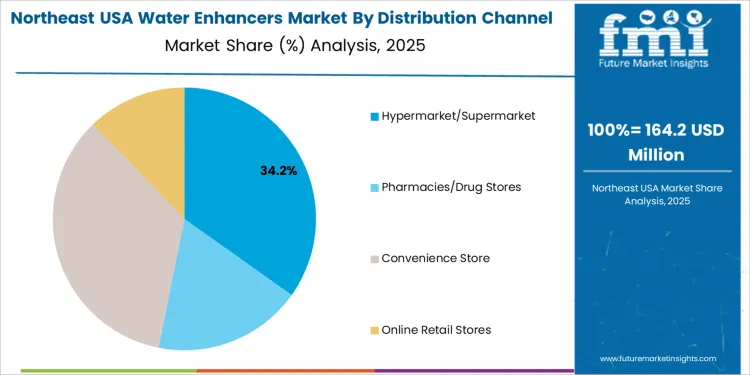
The Northeast USA records an 8.4% CAGR, linked to the strong acceptance of reduced-sugar beverage trends in urban centers such as New York, Boston, and Philadelphia. Consumer behavior favors compact packaging formats suited to commuter lifestyles and limited kitchen-storage environments. Retailers integrate water enhancers into healthy-snacking planograms, aligning with wellness-centric purchasing behavior among young professionals. Brands emphasize vitamin-enriched and immunity-linked claims targeting office workers and public-transit travelers. Institutional procurement expands in universities and corporate food-service programs promoting refillable hydration stations. Operational decisions prioritize accurate dosing, visual clarity in beverages, and ingredient transparency aligned with retailer quality-screening policies.
- Urban wellness trends supporting clean-label hydration
- On-the-go packaging formats driving convenience adoption
- Food-service channels incorporating refillable-station pairings
- Label-compliance requirements shaping supplier evaluations
How is the Midwest USA supporting steady category expansion?
The Midwest USA grows at 7.3% CAGR, reflecting stable adoption through mainstream grocery, club stores, and multipack channels serving large household segments across Illinois, Ohio, and Michigan. Value-focused purchasing drives interest in economy-size concentrate bottles and bulk stick-packs intended for frequent family use. Sports participation in schools and community programs increases baseline demand for functional hydration options beyond sugary sports drinks. Manufacturers assess compatibility with high-speed packaging lines used in regional co-packing ecosystems, focusing on spout, cap, and heat-seal reliability. Distributors prioritize inventory based on consistent baseline movement rather than rapid seasonal surges. Procurement preferences emphasize predictable pricing and broad flavor availability to support recurring replenishment cycles.
- Family-size multipacks sustaining baseline consumption
- Youth sports driving functional-hydration transition
- Co-packing compatibility guiding SKU engineering
- Cost-stable supply supporting repeat purchasing
What does the competitive structure for water-enhancer demand in the United States show?
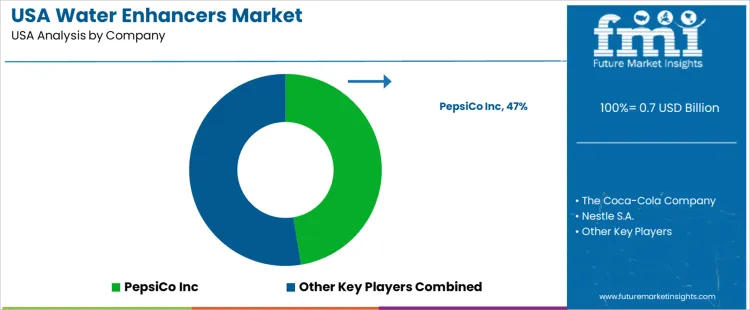
Water-enhancer demand in the United States is driven by flavor convenience, sugar-reduction, and portable hydration trends across retail and e-commerce channels. Adoption concentrates in on-the-go formats, where consumers expect strong flavor delivery at low serving cost. Procurement and placement decisions by retailers emphasize product stability, clean ingredient panels, and packaging that supports portability without leakage. Growth links to sports-hydration extensions and improved acceptance of functional additives such as electrolytes, caffeine, and vitamin blends.
PepsiCo Inc. holds about 47.4% share in the United States, supported by broad distribution and brand recognition in Gatorade and Mio-style flavored drops across grocery and convenience environments. The Coca-Cola Company remains competitive through flavored hydration and low-calorie extensions tied to sparkling-water and still-beverage portfolios. Nestlé S.A. participates through fortified drink-additive concepts positioned toward lifestyle hydration preferences. The Kraft Heinz Company addresses value-driven channels offering concentrated flavor systems suited to family use.
Britvic Plc retains niche participation linked to targeted brand placements in flavored-water and active-hydration categories. Competitive success depends on rapid dissolution, controlled flavor carry-through in chilled formats, and packaging ergonomics that maintain dispensing consistency. Demand continues to reflect the shift toward lower sugar exposure and flavor customisation across widespread USA consumption occasions.
Key Players in USA Water Enhancers Demand
- PepsiCo Inc.
- The Coca-Cola Company
- Nestlé S.A.
- The Kraft Heinz Company
- Britvic Plc
Scope of the Report
| Items | Values |
|---|---|
| Quantitative Units | USD billion |
| Product Type | Flavored, Workout & Fitness, Energy |
| Distribution Channel | Hypermarket/Supermarket, Pharmacies/Drug Stores, Convenience Store, Online Retail Stores |
| Regions Covered | West USA, South USA, Northeast USA, Midwest USA |
| Key Companies Profiled | PepsiCo Inc., The Coca-Cola Company, Nestlé S.A., The Kraft Heinz Company, Britvic Plc |
| Additional Attributes | Dollar sales by product type and distribution channels; regional consumption penetration across West, South, Northeast, and Midwest USA; influence of health-focused and sugar-reduction claims on demand; growing ecommerce adoption for portable hydration enhancers; product innovation in functional categories including electrolytes, vitamins, and caffeine-based blends; competition among legacy beverage brands and emerging fitness-focused entrants. |
USA Water Enhancers Demand by Segments
Product Type:
- Flavored
- Workout & Fitness
- Energy
Distribution Channel:
- Hypermarket/Supermarket
- Pharmacies/Drug Stores
- Convenience Store
- Online Retail Stores
Region:
- West USA
- South USA
- Northeast USA
- Midwest USA
Frequently Asked Questions
How big is the demand for water enhancers in USA in 2025?
The demand for water enhancers in USA is estimated to be valued at USD 0.7 billion in 2025.
What will be the size of water enhancers in USA in 2035?
The market size for the water enhancers in USA is projected to reach USD 1.7 billion by 2035.
How much will be the demand for water enhancers in USA growth between 2025 and 2035?
The demand for water enhancers in USA is expected to grow at a 9.1% CAGR between 2025 and 2035.
What are the key product types in the water enhancers in USA?
The key product types in water enhancers in USA are flavored, workout & fitness and energy.
Which distribution channel segment is expected to contribute significant share in the water enhancers in USA in 2025?
In terms of distribution channel, hypermarket/supermarket segment is expected to command 36.0% share in the water enhancers in USA in 2025.
link



More Stories
Voltage Regulators Market Analysis: End-Use Segments & Revenue Forecast
$9.71 Bn Electric Two Wheeler Market Analysis by Vehicle, Voltage Type, Motor Type, Battery, Motor Power, Technology, Vehicle Class, Usage, Region
Grain Alcohol Market Analysis: Segmentation, Major Trends,