
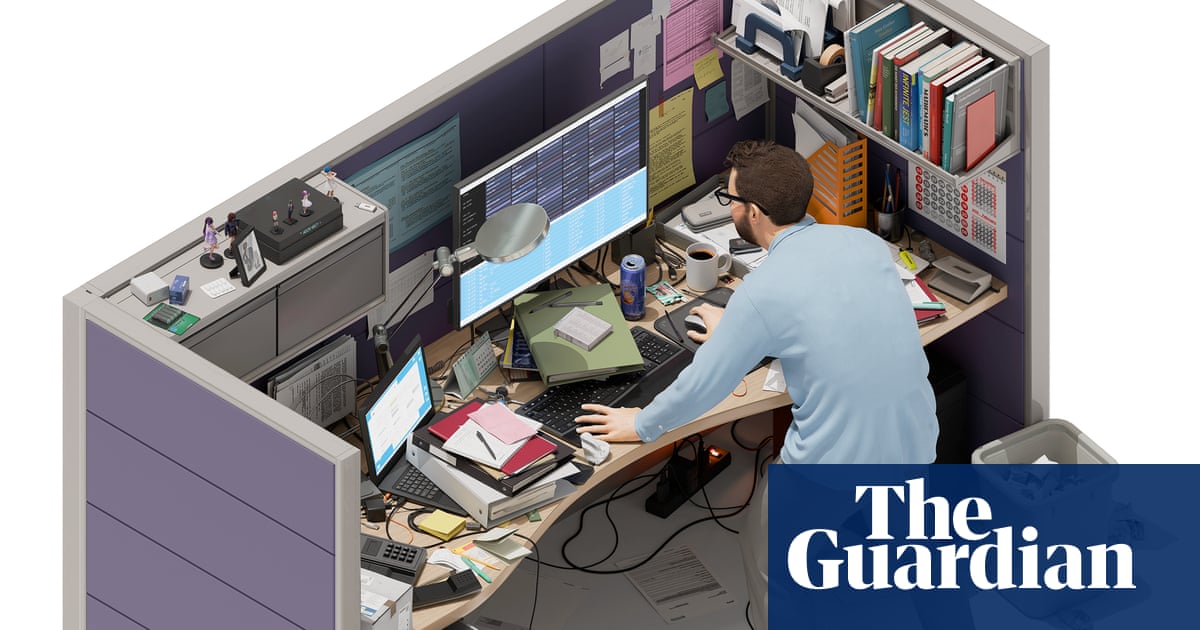
Wherever you’re working right now, how productive do you really feel? To be clear, this doesn’t mean how many hours you’ve clocked or how hard you think you’ve worked. This is simply a question of how much impact your effort has truly had. I’ll wager that whether you feel you’ve smashed it out the park today or not, there’s a lingering feeling you could add much greater value, if only someone helped manage the endless stream of admin and tackle those unexpected curve balls that make up the modern working week.
This individual feeling reflects the much bigger national challenge of solving the UK’s ongoing productivity puzzle. Since the 2008-09 recession, productivity growth in the UK has been frustratingly stagnant – and it’s only worsened post pandemic. At an organisational level, we’re seeing a troubling trend whereby, as workloads expand and teams become leaner, managers are taking on too much. What may look like efficiency on paper often masks deeper issues such as burnout, disengagement and the erosion of team dynamics and workplace culture.
A consequence of growing macro-economic complexities is that organisations tend to deprioritise investing in the human element that holds workplaces and, by extension, culture, together. In the UK this decline can be seen in the demise of ‘secretarial and related occupations’, which almost halved from 1.5 million to 800,000 between 2001 and 2022, according to ONS data. The decline in roles such as office managers, personal assistants and secretaries has left a gap not only in operational support, but in the very soul of the workplace.
Although AI and automation are plugging (and contributing to) this gap by transforming the way we work, they can’t replace the subtle but powerful human touch that makes teams feel supported, connected and energised. The reality is, as companies adapt to 21st century demands, they overlook the essential role of human connection and the individuals who facilitate it.
New research from Right Management shows employees still want to connect in person. The majority (70 per cent) believe they work better together ‘in real life’ and 40 per cent say their colleagues help them perform at their best. At the same time, however, a recent King’s College London study reveals that 58 per cent of employees would quit or job hunt if forced back to the office full time. This tension between the need for in-person collaboration and the desire for flexibility is a conundrum that business leaders haven’t cracked.
The solution isn’t to drag people back to the office, as some organisations are doing with very mixed success, nor is it to double down on automation or augmented platforms and hope they can replicate real-world engagement. Instead, it’s time to reimagine a role that has been underappreciated and underused: the employee experience manager. Think of it as an evolution of the office manager. Not someone who just keeps the stationery stocked or coordinates meeting rooms, but a strategic partner to HR and senior leadership. A champion for culture and a facilitator of creativity. A designer of workspaces and moments that make people want to be in the office.
The employee experience manager bridges the gap between culture, logistics and wellbeing. They ensure hybrid working works culturally as well as functionally. They make it easier for managers to lead, for teams to thrive and for organisations to build a workplace culture that is magnetic and meaningful.
This isn’t just about productivity hacks or making the office ‘fun’. It’s about building support systems that allow people to do their best work. When employees are stretched thin and asked to prioritise competing demands without meaningful support, something breaks. Having a person whose job is to anticipate needs, remove friction and spark belonging is a way to ensure this doesn’t happen.
Reinstating or reimagining these roles is a smart move in the battle for better culture and diversity. Some organisations are already ahead of the curve in this respect but, frankly, many are falling behind. Leaders often talk about building diverse teams but overlook the importance of connection and cognitive diversity. That doesn’t happen by accident.
The employee experience manager could be vital in getting us back on track, preventing us from simply resigning ourselves to a workplace of disjointed ChatGPT threads, soulless virtual meetings and empty offices.
The future of work needs more humanity and fewer black and white debates about flexible working. It should start by recognising the value of roles that are designed to set people up for success, making them feel supported and meaningfully engaged. The office manager, reinvented for today’s workplace, could become a powerful lever for organisational resilience, helping to close the gap between employee interactions and new technologies. Making the case for this feels almost radical in today’s workplace discourse, but it needn’t be revolutionary – it should be common sense.
Lorraine Mills is a chartered occupational psychologist at Right Management
link


More Stories
Trump administration further clarifies telework expectations
Management Technician for Military & Veteran Services & New Student Orientation
Business of Home